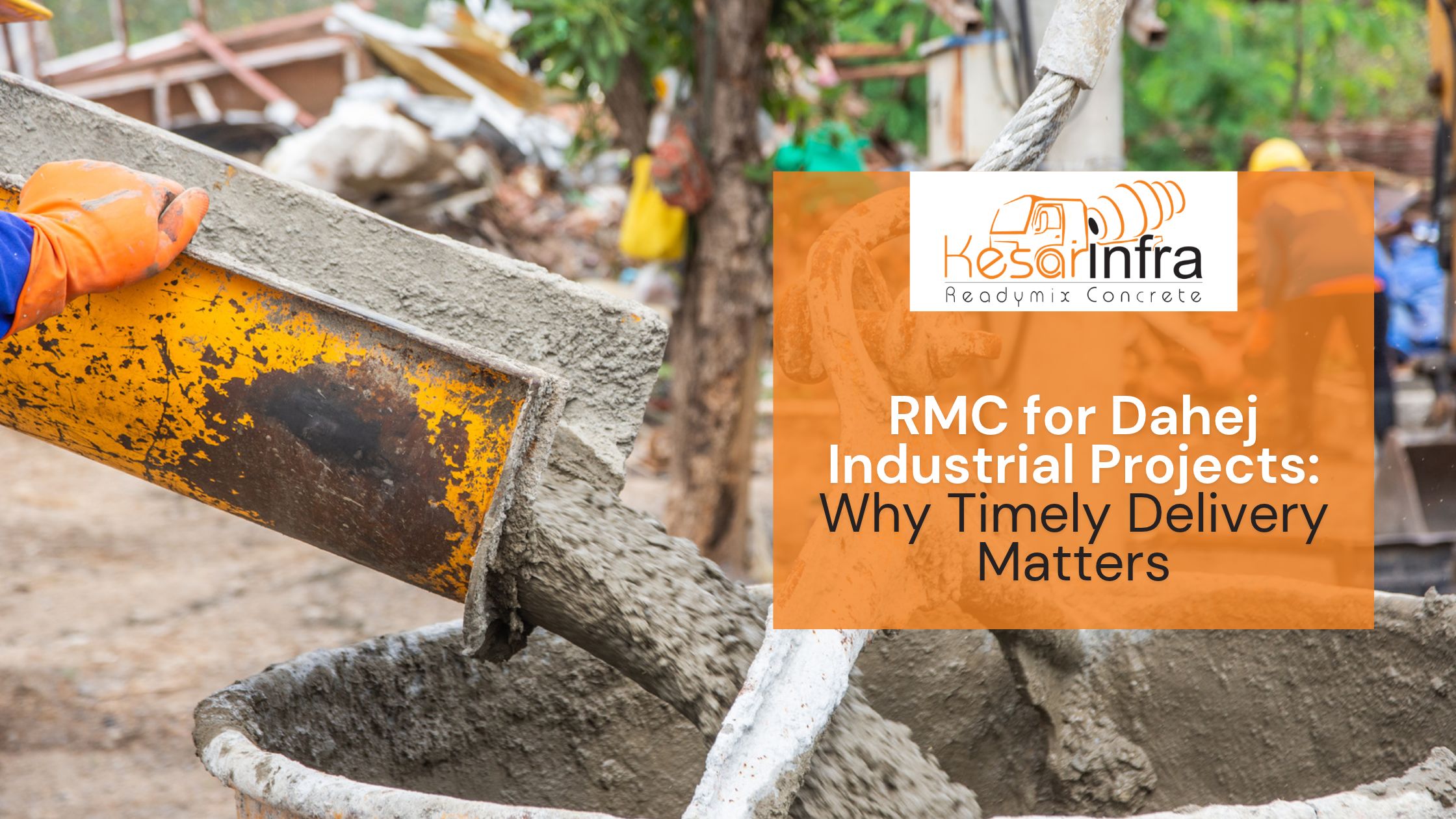
RMC for Dahej Industrial Projects: Why Timely Delivery Matters
In industrial construction, every stage of a project depends on proper planning and coordination. From laying foundations to constructing factory floors, warehouses, and structural components, concrete plays an important role. However, arranging the right concrete mix is only one part of the process. Getting it to the construction site on time is equally important.
For projects in Dahej, Gujarat, where industrial construction requires coordination among contractors, engineers, labour, and equipment operators, timely ready-mix concrete (RMC) delivery can help keep construction schedules on track. Delays in concrete supply can interrupt planned pours and affect other site operations.
This is why choosing an experienced RMC supplier in Dahej and planning concrete deliveries are important considerations for industrial construction projects.
Why Is Ready-Mix Concrete Important for Industrial Projects in Dahej?
Industrial projects often involve large foundations, heavy-duty flooring, warehouses, factory buildings, equipment foundations, and internal roads. These applications require concrete that meets specific grades, workability requirements, and project specifications.
Ready-mix concrete is manufactured at a batching plant according to a designed mix proportion and transported to the construction site in transit mixers.
Compared with preparing concrete directly at the site, RMC offers several practical advantages:
- Consistent mix proportions: Concrete is produced according to the approved mix design.
- Better project coordination: Planned deliveries help site teams organise concrete placement activities.
- Reduced on-site preparation: Contractors do not need to arrange every concrete ingredient and mixing operation at the site.
- Support for larger pours: Scheduled transit mixer deliveries can support projects requiring substantial concrete quantities.
- Efficient site operations: RMC can reduce the space and labour needed for on-site concrete mixing.
These advantages make ready-mix concrete a practical option for many industrial construction requirements.
Why Does Timely RMC Delivery Matter at Industrial Construction Sites?
Concrete placement involves several activities that need to happen in coordination. Reinforcement, formwork, labour, concrete pumps, and finishing teams must be ready before the concrete arrives.
When RMC delivery follows the planned schedule, site teams can coordinate these activities more efficiently.
Timely delivery matters for three main reasons:
1. Maintains planned construction activities
Concrete pouring is often scheduled around specific site activities. Delayed deliveries can interrupt the planned sequence and affect subsequent work.
2. Helps coordinate labour and machinery
Workers, transit mixers, concrete pumps, and other equipment need to be available at the right time. Better delivery planning can reduce unnecessary waiting.
3. Supports continuous concrete placement
For large foundations and industrial flooring, concrete may need to be placed in a planned sequence. Coordinated deliveries help reduce avoidable interruptions during the operation.
How Can RMC Delivery Delays Affect Industrial Construction?
An unexpected delay in ready-mix concrete supply can create challenges beyond the immediate pouring activity.
Some possible effects include:
- Labour and equipment remaining idle while waiting for concrete.
- Disruption to scheduled concreting activities.
- Difficulties coordinating multiple transit mixer arrivals.
- Changes to the planned placement sequence.
- Additional site management and scheduling requirements.
Long interruptions during concrete placement may also create construction-joint considerations. The appropriate procedure depends on the structural design and the instructions of the responsible engineer.
This is why contractors should communicate their concrete requirements and delivery schedules clearly before the planned pouring activity.
Key Factors That Affect RMC Delivery in Dahej
Several factors can influence how efficiently ready-mix concrete reaches an industrial construction site.
Transportation distance: The distance between the batching plant and the site affects travel time and delivery planning.
Road and traffic conditions: Traffic congestion, roadwork, and industrial vehicle movement can influence transportation schedules.
Site accessibility: Narrow entry points, vehicle restrictions, and internal site movement can affect transit mixer access.
Weather conditions: Rain, high temperatures, and other weather conditions may affect transportation, workability management, and concrete placement.
Plant and vehicle scheduling: Concrete production, order volumes, and transit mixer availability must be coordinated to meet delivery requirements.
For projects in Dahej and nearby industrial areas, discussing these factors with the RMC supplier before placing an order can help avoid preventable coordination problems.
Why Is Proper Coordination Important Between RMC Suppliers and Site Teams?
Timely delivery is not the responsibility of the supplier alone. It requires communication between the RMC plant and the construction site.
Before scheduling a concrete order, the contractor should share:
- Required concrete grade and mix specifications.
- Estimated concrete quantity in cubic metres.
- Planned pouring date and delivery time.
- Site location and vehicle access details.
- Required slump and placement method.
- Concrete pump or other equipment requirements, where applicable.
The supplier can then plan production and vehicle dispatch according to the agreed schedule and operational availability.
Clear communication also helps the site team prepare reinforcement, formwork, labour, and equipment before the first transit mixer arrives.
What Should Industrial Buyers Check Before Ordering RMC?
Selecting an RMC supplier involves more than comparing prices. Industrial buyers should evaluate whether the supplier can meet the project's technical and logistical requirements.
Consider these important points:
- Concrete grade: Confirm that the required grade matches the structural specifications.
- Mix design: Discuss the approved mix design and intended application.
- Slump requirements: Specify the required workability according to the project documents.
- Delivery planning: Confirm the expected delivery schedule and vehicle coordination.
- Transportation arrangements: Check the distance, site access, and expected travel conditions.
- Quality documentation: Ask about relevant mix design and quality-control documentation.
- Communication: Ensure there is a clear process for coordinating order changes or delivery issues.
These checks help procurement teams make more informed decisions when selecting an RMC supplier near Dahej.
How Does a Reliable RMC Supply Plan Support Large-Scale Projects?
Large industrial projects may require concrete across different construction stages. These can include foundations, columns, beams, slabs, flooring, and external infrastructure.
A well-planned RMC supply schedule considers the quantity required, pouring sequence, plant production arrangements, transportation time, and site readiness.
For example, before a large foundation pour, the contractor should confirm the total concrete requirement, the expected placement duration, the pump arrangement, and the sequence of transit mixer arrivals.
This approach helps reduce unnecessary waiting and makes it easier for site teams to manage concrete placement.
Why Is RMC Quality Important Along With Timely Delivery?
Fast delivery has little value if the concrete does not meet the project's requirements. Quality and timing must be considered together.
Fresh concrete should be checked according to the project's quality-control plan. Slump testing helps assess workability, while compressive strength testing using concrete specimens helps evaluate strength at the specified testing age.
Proper placement, compaction, and curing are also essential for achieving the intended concrete performance.
Industrial buyers should therefore select an RMC supplier that understands both the technical specifications and the delivery requirements of the project.
Why Choose Kesar Infra for RMC Supply Near Dahej?
Kesar Infra provides ready-mix concrete solutions for construction requirements in Dahej and nearby areas of South Gujarat. With operations and plant presence in locations including Vapi, Umbergaon, and Dahej, Kesar Infra supports concrete supply requirements across its service areas.
The company also works with equipment such as transit mixers and concrete pumps to support concrete transportation and placement requirements.
For industrial construction projects, customers can discuss their required concrete grade, estimated quantity, site location, placement method, and preferred delivery schedule with the Kesar Infra team.
Planning these details helps align concrete supply arrangements with site requirements.
Conclusion
Timely RMC delivery is an important part of managing industrial construction projects in Dahej. It helps contractors coordinate labour, machinery, concrete placement, and other site activities while reducing avoidable interruptions.
However, delivery planning must go hand in hand with the correct concrete grade, suitable workability, quality checks, and proper placement practices.
If you are planning an industrial construction project in Dahej or nearby areas, contact Kesar Infra to discuss your ready-mix concrete requirements and delivery planning.
Frequently Asked Questions
1. Why is timely RMC delivery important for industrial projects?
Timely RMC delivery helps coordinate concrete pouring, labour, machinery, and site activities. It can reduce unnecessary waiting and support planned construction schedules.
2. What factors affect ready-mix concrete delivery in Dahej?
Transportation distance, road conditions, traffic, weather, site accessibility, plant scheduling, and transit mixer availability can influence RMC delivery.
3. What should I check before ordering RMC for an industrial project?
Confirm the concrete grade, mix design, required slump, quantity, delivery schedule, site access, and placement requirements before placing an order.
4. How does RMC help with large-scale industrial construction?
RMC is produced at a batching plant according to an approved mix design. Planned transit mixer deliveries can support large concrete pours and reduce the need for on-site mixing.
5. Can delivery delays affect concrete quality?
Delays can affect the workability of fresh concrete, depending on transportation time, mix characteristics, weather, and handling conditions. Concrete should be assessed according to the applicable specifications and quality-control procedures.
6. How can I find an RMC supplier in Dahej?
Compare suppliers based on their service coverage, concrete grades, mix design capabilities, transportation arrangements, quality-control practices, and ability to coordinate deliveries with your construction schedule.