What Is Concrete Slump and Why Does It Matter? Guide by Kesar Infra
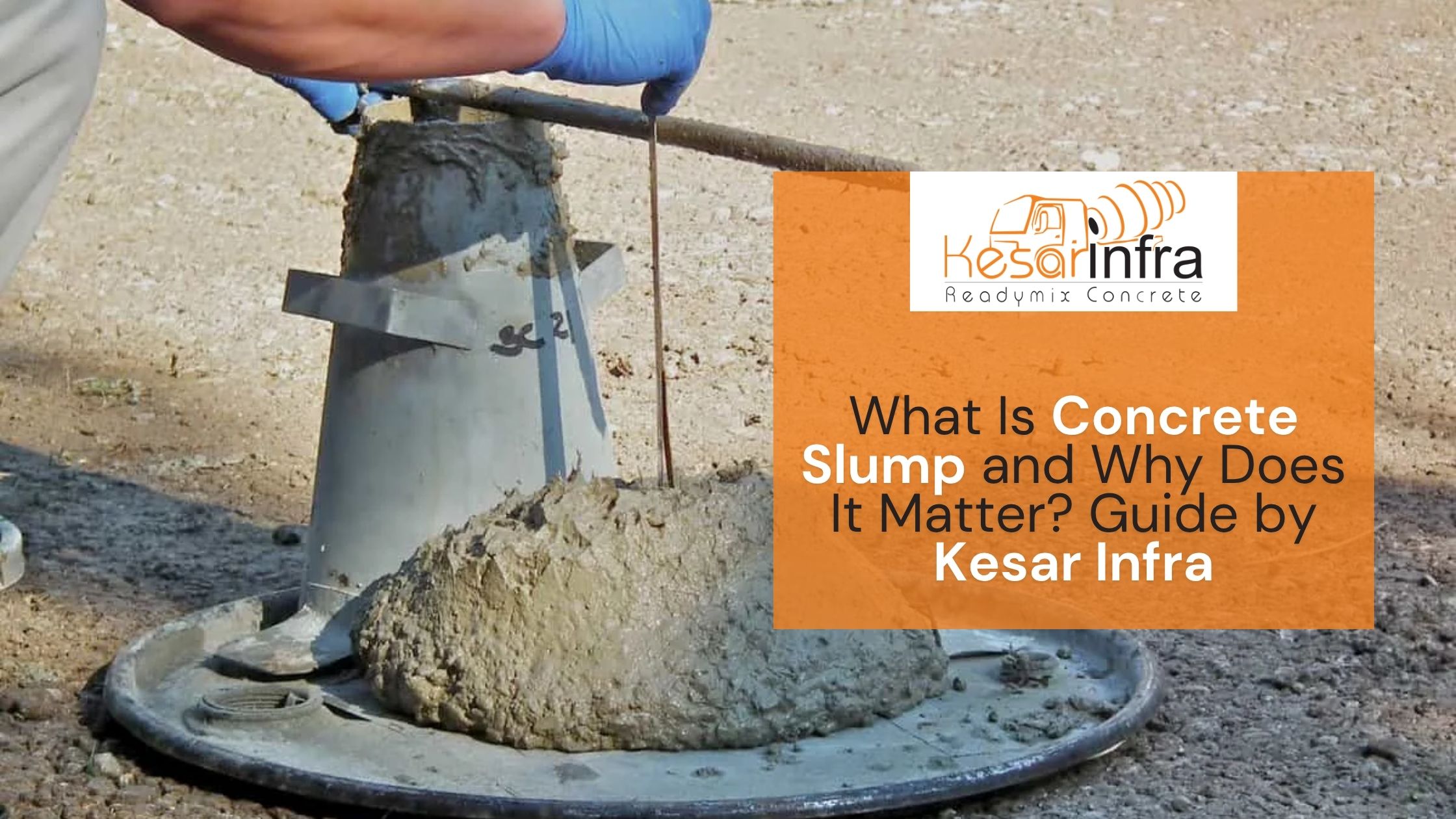
Concrete must be workable enough to place, compact, and finish correctly without compromising its intended performance. One important way to assess the workability of fresh concrete is the concrete slump test. It helps construction teams understand how a concrete mix behaves before it is placed in a slab, foundation, column, or other structural element.
For construction projects in Vapi and across South Gujarat, checking the slump of ready-mix concrete (RMC) can help site teams identify whether a delivered mix is consistent with the approved requirements. However, slump is not a direct measurement of concrete strength or overall quality.
What Is Concrete Slump?
Concrete slump is the measured amount by which fresh concrete settles after a standard cone-shaped mould is lifted away. It is commonly expressed in millimetres and indicates the consistency of fresh concrete under a standard test.
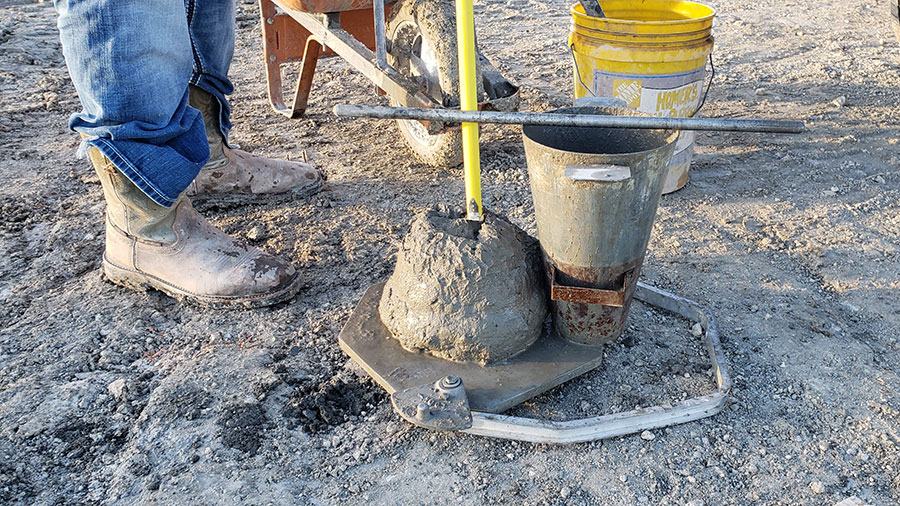
A higher slump generally indicates a more fluid mix, while a lower slump indicates a stiffer mix. The appropriate slump depends on the mix design, reinforcement spacing, placement method, and project specifications.
Concrete slump is particularly relevant for ready-mix concrete because the mix must remain suitable for transportation, discharge, placement, and compaction at the construction site.
What Is a Concrete Slump Test?
A concrete slump test is a standard field test used to assess the consistency of fresh concrete. It is commonly performed in accordance with applicable standards, such as IS 1199 (Part 2), where relevant to the project.
The test helps site engineers and quality-control personnel compare the delivered concrete's consistency with the specified acceptance range. It does not independently confirm compressive strength, durability, or the complete quality of the concrete.
How Is the Concrete Slump Test Performed?
The test requires a standard slump cone, a rigid and level base, a tamping rod, and a suitable measuring scale.
The general procedure is:
- Prepare the equipment: Clean and dampen the cone and base, then position the cone securely on a level surface.
- Fill the cone: Add fresh concrete in the number of layers and using the procedure specified by the applicable test standard.
- Compact each layer: Rod the concrete as prescribed to help remove large air pockets and ensure consistent testing.
- Lift the cone: Raise the mould vertically and carefully without twisting or disturbing the concrete.
- Measure the slump: Measure the vertical difference between the mould's original height and the displaced concrete's highest point, following the applicable standard.
The test should be carried out promptly after sampling. If the concrete shears to one side or collapses, the result may be invalid or may require interpretation according to the relevant standard and site quality-control procedure.
What Are the Different Types of Concrete Slump?
The observed shape after lifting the cone is generally described in three ways:
- True slump: The concrete subsides relatively evenly and retains a broadly similar shape. This is generally the expected form for a valid conventional slump test.
- Shear slump: Part of the concrete mass slips sideways. This may indicate a lack of cohesion or an unsuitable test result, so the test may need to be repeated as prescribed.
- Collapse slump: The concrete collapses significantly after the cone is removed. This can occur with very fluid mixes, and the conventional slump measurement may not adequately describe their consistency.
The shape matters as well as the measured value. A single number should not be used without considering the mix and test conditions.
What Is the Normal Slump Value for Concrete?
There is no single slump value suitable for every concrete application. The required range should be specified in the approved mix design, project documents, and applicable standards.
As a broad illustration, some conventional concrete mixes may use slump values around 25–100 mm, while certain pumped or more congested placements may require higher workability. These figures are not universal acceptance limits and should not replace project-specific requirements.
What Is the Best Slump for a Concrete Slab?
The best slump for a concrete slab depends on slab thickness, reinforcement, access, placing equipment, finishing requirements, and the approved mix design. A slab that is easy to place is not necessarily a slab that will perform well if its water content or proportions are incorrect.
For a ready-mix concrete order, confirm the specified slump with the supplier and site engineer before delivery. Avoid adding water at the site without authorization, as it can change the water-cement ratio and affect strength, durability, and shrinkage.
What Factors Affect Concrete Slump?
Several factors can influence a concrete slump test result:
- Water content: Additional water generally increases fluidity but may negatively affect concrete performance if the mix is altered improperly.
- Aggregate properties: Aggregate size, shape, grading, and surface texture influence the amount of water and paste needed for workability.
- Cement and admixtures: Mix proportions and approved chemical admixtures can change the consistency of fresh concrete.
- Elapsed time and temperature: Concrete can lose workability during transport or waiting, and hot weather may accelerate this process.
- Mixing and handling: Inconsistent mixing, sampling, or testing procedures can affect the observed result.
A slump difference should be investigated rather than automatically corrected by adding water.
Why Does Concrete Slump Matter in Ready-Mix Concrete (RMC)?
For RMC, slump is a practical indicator of whether fresh concrete has the consistency needed for the planned placement. If the mix is too stiff for the application, placing and compaction may become difficult. If it is excessively fluid or unstable, segregation or bleeding may occur, depending on the mix composition and site conditions.
A suitable slump can support efficient placement, but it must work alongside correct mix proportions, proper compaction, curing, and quality-control checks. Slump alone cannot prove that concrete meets its specified compressive strength.
Concrete Slump vs Concrete Strength: What Is the Difference?
Concrete slump measures the consistency of fresh concrete, whereas compressive strength measures its ability to resist compressive loads, typically determined using specimens tested at a specified age.
A higher slump does not automatically mean stronger concrete. If it is achieved by adding uncontrolled water, the resulting increase in the water-cement ratio may reduce strength and durability. Workability should be achieved through an appropriately designed mix and approved adjustments, not by chasing a higher slump number.
What Happens If a Concrete Slump Is Too High or Too Low?
A low slump may make concrete difficult to place and compact, particularly around reinforcement or in narrow sections. Poor compaction can leave voids and affect the finished element.
A high slump may be acceptable for some designed mixes, but an unexpectedly high result can signal a mix inconsistency or excess water. Depending on the concrete, this can contribute to segregation, bleeding, or finishing problems.
If the result falls outside the specified range, notify the site engineer and supplier. Follow the project's acceptance and corrective-action procedure before placing the concrete.
How Is Slump Checked When RMC Arrives at the Site?
Site personnel should verify the delivery details and carry out slump testing when required by the project's quality plan. The sample should be collected and tested using the applicable standard and at the appropriate stage of delivery. The measured result should be compared with the approved acceptance range.
If the result is outside that range, the site team should document it and consult the responsible engineer and supplier. Do not make unauthorized changes to the mix or accept concrete solely because it appears easy to pour.
Why Concrete Quality Matters When Choosing an RMC Supplier
Choosing an RMC supplier involves more than comparing prices. Buyers should confirm that the supplier understands the project's concrete grade, required workability, delivery schedule, placement method, and quality documentation requirements. Clear communication helps reduce the risk of mismatched specifications and site delays.
For projects in Vapi and nearby areas of South Gujarat, these checks are especially useful when coordinating concrete deliveries with labour, pumps, reinforcement work, and site access.
Why Choose Kesar Infra for Ready-Mix Concrete in Vapi?
Kesar Infra supplies ready-mix concrete for construction requirements in Vapi and nearby areas of South Gujarat. When planning an order, discuss the required concrete grade, application, placement method, delivery location, and specified slump with the team.
Sharing these details in advance helps align the order with the project's requirements. The final mix and acceptance criteria should always follow the approved design and the project engineer's instructions.
Conclusion
Concrete slump is an important measure of fresh concrete consistency. A properly conducted slump test helps construction teams assess workability and identify potential differences between the specified mix and the delivered concrete. However, the correct slump depends on the application, and slump alone does not establish concrete strength or durability.
For ready-mix concrete projects in Vapi, confirm the approved slump range, test concrete correctly, and consult the responsible engineer if results fall outside the specification. Contact Kesar Infra to discuss ready-mix concrete requirements for your construction project in Vapi and nearby areas.
Frequently Asked Questions
1. What is a concrete slump?
Concrete slump is the amount fresh concrete subsides after a standard cone-shaped mould is lifted. It is measured in millimetres and indicates the consistency of the mix.
2. What is a slump test result?
A slump test result is the measured vertical subsidence of fresh concrete after the cone is removed. The result is compared with the specified range for the intended application.
3. What is the best slump for a concrete slab?
There is no universal best slump for every slab. The appropriate value depends on the approved mix design, slab construction details, reinforcement, placing method, and project specifications.
4. Does a higher slump mean stronger concrete?
No. Slump indicates fresh concrete consistency, not compressive strength. Adding uncontrolled water to increase slump can raise the water-cement ratio and may reduce strength and durability.
5. Why is slump testing important for ready-mix concrete?
Slump testing helps check whether delivered fresh concrete has the required consistency for placement. It is one quality-control check and should be considered alongside mix specifications and other required tests.
6. Can water be added to ready-mix concrete at the site?
Water should not be added without authorization and compliance with the approved mix design and project procedures. Any permitted adjustment must be controlled and documented by the responsible personnel.