
Top Concrete Tests for Strong & Durable Structures
Concrete is one of the most widely used construction materials in the world, forming the foundation of buildings, roads, bridges, and industrial structures. However, the strength and durability of any structure depend not just on the materials used, but on how well those materials are tested. Without proper concrete testing, even high-quality materials can fail under pressure, leading to safety risks and costly repairs.
This is why understanding the top concrete tests is essential for engineers, contractors, and project owners. At Kesar Infra, quality assurance is a priority, and every batch of ready mix concrete is carefully tested to ensure reliability, performance, and long-term durability.
Why Concrete Testing is the Backbone of Strong Construction
Concrete testing plays a critical role in ensuring that the material meets required standards before and after application. It helps detect potential issues early and ensures that the structure can withstand environmental and load conditions.
Role of Quality Checks in Preventing Failures
Quality checks are essential in preventing construction failures. Proper testing helps:
- Identify weak or improper mixes
- Ensure uniformity in material quality
- Prevent cracks, shrinkage, and structural damage
- Reduce long-term maintenance costs
Without these checks, even minor defects can grow into serious structural issues over time. Reliable testing ensures that every stage of construction is backed by strong and durable concrete.
Fresh Concrete Tests: First Step to Quality Assurance
Fresh concrete tests are conducted immediately after mixing and before placement. These tests ensure that the concrete is workable and suitable for construction.
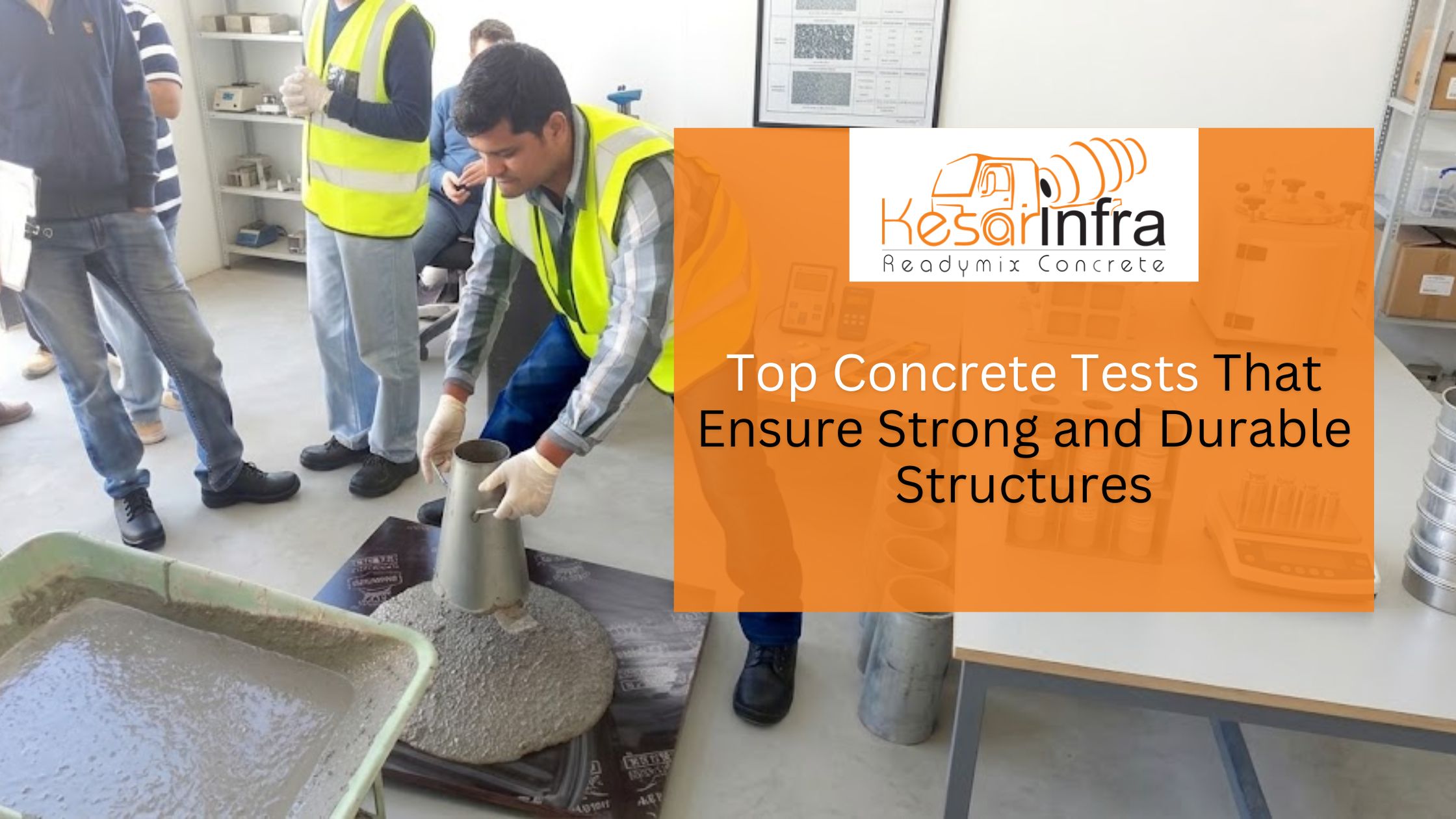
Concrete Slump Test – Measuring Workability on Site
The concrete slump test is one of the most important and widely used types of concrete tests. It measures the consistency and workability of fresh concrete.
During the test, concrete is poured into a cone-shaped mold and then lifted to observe how much the concrete settles or “slumps.”
Key benefits of the slump test include:
- Ensures proper water-cement ratio
- Determines ease of placement and compaction
- Prevents segregation and bleeding
A proper slump value indicates that the concrete will be easy to handle and place without compromising strength.
Field Test of Concrete – Quick On-Site Quality Checks
In addition to slump testing, several field tests of concrete are performed directly at the construction site to ensure quality.
These include:
- Visual inspection for uniform color and texture
- Temperature checks, especially in hot weather
- Simple hand tests to assess consistency
These quick tests help site engineers make immediate decisions and maintain quality during the construction process.
Strength Testing of Concrete: Core of Structural Performance
The strength of concrete determines how well a structure can handle loads and environmental stress. This makes concrete strength tests one of the most critical aspects of construction.
Concrete Strength Test – Why Strength Matters Most
A concrete strength test evaluates the compressive strength of concrete, which is its ability to withstand heavy loads without failure.
Importance of strength testing:
- Ensures structural safety
- Confirms compliance with design specifications
- Helps maintain consistency across batches
Strong concrete ensures that buildings, bridges, and other structures remain stable and safe over time.
Concrete Cube Test – Standard Method to Measure Strength
The concrete cube test is the most common method used to measure compressive strength.
In this test:
- Concrete is poured into cube molds
- The cubes are cured for specific periods (7, 14, or 28 days)
- They are tested using a compression testing machine
The results provide accurate data about the strength and durability of the concrete. At Kesar Infra, cube testing is a standard practice to ensure every delivery meets quality benchmarks.
Advanced Concrete Testing for Long-Term Durability
While basic tests ensure initial quality, advanced testing methods help evaluate long-term performance and durability.
Water Permeability Test – Resistance to Moisture Damage
The water permeability test measures how easily water can pass through concrete. This is important because water penetration can lead to corrosion of reinforcement and structural damage.
Benefits of this test:
- Ensures resistance to water seepage
- Improves durability in harsh environments
- Reduces risk of long-term damage
Low permeability indicates high-quality, durable concrete suitable for long-lasting structures.
Non-Destructive Testing (NDT) – Checking Internal Quality
Non-Destructive Testing (NDT) methods allow engineers to evaluate concrete without damaging it.
Common NDT methods include:
- Rebound hammer test
- Ultrasonic pulse velocity test
These tests help detect internal cracks, voids, and inconsistencies, ensuring that the structure is safe and reliable.
Common Mistakes in Concrete Testing That Affect Results
Even with proper methods, mistakes during testing can lead to inaccurate results and poor decision-making.
Errors in Sampling and Curing
Some common mistakes include:
- Improper sample collection
- Incorrect curing conditions
- Delays in testing
These errors can affect the accuracy of results and lead to incorrect conclusions about concrete quality.
Misinterpretation of Test Results
Another major issue is misinterpreting test data. Without proper expertise, results may be misunderstood, leading to:
- Use of substandard concrete
- Structural risks
- Increased repair costs
Proper training and expertise are essential to ensure accurate analysis and decision-making.
How Quality Testing Improves Construction Efficiency
Concrete testing not only ensures quality but also improves overall construction efficiency.
Reducing Material Waste and Rework
With proper testing:
- Defective batches can be identified early
- Material wastage is minimized
- Rework and delays are reduced
This leads to cost savings and faster project completion.
How Kesar Infra Ensures High-Quality Concrete Through Testing
At Kesar Infra, quality testing is integrated into every stage of the production and delivery process. As a trusted provider of ready mix concrete and a reliable RMC plant in Gujarat, the company follows strict quality control measures.
Key practices include:
- Advanced batching systems for consistent mix quality
- Regular concrete cube tests for strength verification
- On-site concrete slump tests for workability
- Continuous monitoring of raw materials
By combining technology with expertise, Kesar Infra ensures that every project receives durable and high-performance concrete.
Conclusion
Concrete testing is the foundation of safe and durable construction. From fresh concrete checks like the concrete slump test to strength evaluations like the concrete cube test, each method plays a crucial role in ensuring quality.
Ignoring these tests can lead to structural failures, increased costs, and safety risks. On the other hand, proper testing ensures strong, reliable, and long-lasting structures.
With a strong focus on quality and innovation, Kesar Infra continues to deliver high-standard ready mix concrete solutions backed by advanced testing and expert practices.
Looking for reliable and tested concrete for your next project?
Contact Kesar Infra today for high-quality ready mix concrete solutions that ensure strength, durability, and peace of mind.